So far everyone who has been born has also died. This means that every manner of intervention we deem heroic, honorable, good can be found such not on its merits of averting death, but on facilitating life and/or preventing misery. In this regard most fictional heroes or even superheroes seem to me a pathetically insignificant bunch - they are nothing more than warriors, and while warriors have their uses at keeping peace, it seems to me that the top tiers of heroism are inhabited by the philosopher-kings, the tinkerers, the scientists. So it is in reality. Military men get their parades and fancy cars and gunshot-punctuated glory, but the true glory of deciding the fate of a species, a civilization, a planet does not even enter their horizon.
As a classic male I am interested in extremes and in this case I want to share my idea of the ultimate heroism. Here are the two men I think command the most uberness in the human history (besides the person who introduced fire). Their interventions have in the most real, biological sense enabled the existence of at least two billion human beings or prevented an equal number of dying from hunger. While it could be argued that the discoveries they made could, and would have eventually, be made by other people if not for them, I think it uncontroversial to claim that the type of world we inhabit thanks to their input is a significantly better one than most imaginable alternatives.
Fritz Haber
9 December 1868 – 29 January 1934
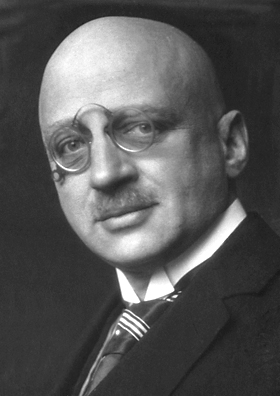
Fritz Haber was a German Noble prize-winning chemist who during his time in the University of Karlsruhe (1894-1911) developed what is now called the "Born–Haber cycle" - a method to chemically bind the inert nitrogen in the Earth's atmosphere into ammonia essentially releasing the nitrogen cycle from the limits of naturally occurring synthesis during thunderstorms and by bacteria in the roots of leguminous plants. Without this technology the absolute maximum of human population would have been capped at ~2.5 billion - there simply would not be any more chemically available nitrogen left.
As is explained in biographies and monographs about him1,2,3, Haber's life could not be more dramatic if it were fiction. A German-born Jew, Haber lived during the full swing of the industrial revolution in the country that was pushing science to the limits and reaping unimaginable wealth. His brilliant mind was in the right place at the right time, tragically so. Having poured his genius into the betterment of his nation, essentially serving as the critical scientific input behind Germany's war effort during WWI, Fritz Haber saw his homeland decidedly turn against Jews with the rise of the Nazi party. How soul-crushing it must have been to have converted to Protestantism to fit better politically only to have his wife and fellow chemist, Clara Immerwahr, commit suicide in protest at his work [on chemical weapons], but he pressed on undeterred. Ultimately Haber emigrated from Germany in 1933 and died a year later of heart disease.
Norman Borlaug
25 March 1914 – 12 September 2009

Norman Borlaug was an American Nobel prize-winning agronomist who developed semi-dwarf, high-yield, disease-resistant wheat varieties during a research project in Mexico (1944-1950), turning impoverished and agriculturally struggling countries like Mexico and India from wheat importers into exporters, feeding hundreds of millions of people in the process and preventing world-wide food shortages expected by biologist Paul R. Ehrlich in his 1968 bestseller The Population Bomb
The morality? Teach your kids science (or let others do it if you cannot). Nuff said.
1. Master Mind: The Rise and Fall of Fritz Haber, the Nobel Laureate Who Launched the Age of Chemical Warfare
2. Fritz Haber: Chemist, Nobel Laureate, German, Jew: A Biography
3. Fritz Haber, the damned scientist

Nav komentāru:
Ierakstīt komentāru