Today I will show why a somewhat prevalent idea, that of reincarnation, is not compatible with a scientific or even barely consistent world-view.
To start off, I must confess I find it laughable how many people allow themselves to subscribe to the idea that living beings can be born again after death while being Christian. Consistency, people, means that if you go to heaven, you do not get to reincarnate, pick one model, not mash delusions together!
The other ridiculous lack of consistency appears when people subscribe to reincarnation and maintain that there is a choice at birth, usually that kids get to pick their parents, "fated relationships" and so forth. Many people like to think of themselves as "progressive in religion" and espouse a belief in reincarnation thinking it is exclusivity a part of Buddhism, while being completely ignorant that Buddhism has roots in Hinduism and that reincarnation is inseparable from the idea of karma - a person's cosmic balance of morality/good deeds. In India the denounced caste system is based on the idea that a person's birth is determined by karma and low birth can be seen as a punishment for transgressions in a previous life. So traditionally we see birth as determined by karma, and it is only recently and in the West that karma has been decoupled from the system of reincarnation - this, of course, is explained by westerners having hard time adopting such backwater thinking after being bred in a culture the celebrates freedom and had bled for it countless times. Why bother with reincarnation to begin with is beyond me.
To drive it home, consider this: we know for a fact that there are children who suffer horribly and die at a young age, either by parental neglect, inadequate nutrition or genetic disease. If you think that children choose their parents (in any informed manner), you are making a scientifically testable claim which would allow us to see a pattern in births - Sweden should have quadruplets all over and Africa should have the lowest birth-rates in the world - after all, what kind of a child would choose to be born with HIV and to starve to death? Whenever you claim that children choose their parents, you claim that there children that would choose suffering over ALL alternatives. If this passes through your bullshit detector without rising an alert, you need to stock up on some critical thinking skills. :/
So that takes care of progressive Buddhist wannabees. Now for the traditionalists who have no problem with births being determined by karma - what matters is people's actions during their life, they would say. Which is false. Karma, similarly to Abrahamic religion sin-accounting, requires agents with free will. Murder can only be counted against an agent if there were alternatives that the agent failed to pick due to malice, some voluntary shortcoming of this reprehensible agent. Notice that an account of free will like this defeats itself. We are expected to accept that there really are agents that out of a multitude of options (out of hugs, ice cream and murder, for example) would pick murder; same as we were expected to believe that there are unborn children that would prefer being born sick over well-off. Even if there were, it seems to me more a matter of ignorance, not malice, and I find it hard to issue retribution for stupidity.
But some may call this unconvincing, fine. Let's proceed to formal dismantling of a free will. This brief intro to Dennett's talk illustrates perfectly what is wrong with the free will hypothesis. Indeed, nothing is exempt from the natural laws (discovered or otherwise). Perhaps this would make some non-Brights cringe, but it is a matter of as much certainty as anything else in science that the Big Bang and everything that has happened since has happened in accordance with the natural laws of the universe we find ourselves. Think about it - gravity works everywhere and seems to have worked for every nanosecond since we can see - deep space observations confirm this, after all, if it had not, we could expect to find phenomena hard to describe, that would not fit within a time frame of location. Coherent theories that predict future events could not be modeled upon such varying past. We do not live in such a malleable universe. Ours happens to be sticking to the same old rules it was following 14+ billion years ago. Talk about obsessive-compulsive! Needless to say, all four interactions (gravity, weak, strong and electromagnetic) have remained pretty1 unchanged. And there is a fundamental reason these interactions, or the second-to-second changes of our universe have to be etched in stone - Newton's First Law of Thermodynamics. For those not yet familiar with it, that's the one that says that energy can change forms, but can never be created or disappear into nothingness. This is important to understand - we live in a universe that has as much energy now as it had when it Banged and will have the same energy forever and ever. Scientists even have figured out the amount of energy our universe has to a precision of 26 decimals.
This brings me to the famed "two-lever" argument for the absence of a free will. In essence it says what was already mentioned above - the universe started and then it transitions from moment to moment by simply following the laws of nature (for which the findings of physics are a very close approximation). To incorporate "freeness" into this fact of reality one has two options:
- Demonstrate how a conscious, non-natural (for a natural entity can't exist before a universe to exist in) entity could have had influence over the creation for the universe.2
- Demonstrate how conscious beings (humans, etc.) could evade the moment-to-moment transitioning according to natural laws.
I hope you see that humans could not have been part of the Big Bang, since we evolved ~10 billion years after the fireworks and that we possess no way to alter the laws of nature - psychic powers are impossible (and that is good, otherwise it would be possible to change the universe's energy-balance and make it spin out of control).
Lately, however, science-savvy believers have sought to redeem free will with the help of quantum physics, namely Heisenberg Uncertainty Principle. Go ahead an read about it, so that you understand why it has absolutely no bearing on the freedom of will. Put bluntly, HUP says that we do not know for certain where very small particles (like electrons) are - we can only describe their whereabouts in terms of chance to be at a point. And to put bluntly its relevance to freedom of will - if there can be no freedom when we know where the particles are, what possible freedom do we get if we have to roll a dice when ascertaining where the particles are?! Consider this metaphor - the universe lets you roll a dice to determine how many fingers you will lose and there is no zero on the die. The laws of nature having some die-rolling in them does not exclude us from obeying them.
So now we can say with confidence that even while being conscious, humans are merely spectators of the neurobiological drama in their heads that unfolds in accordance with the unchangeable and somewhat random script of the universe. Consider then what a tragedy the drama turns into when an agent picks murder - it must mean that there was no alternative indeed. Again, the cosmic goodness-accountant has no grounds to add a minus, for the agent did not choose murder out of malice; there was no choice, merely a dutiful adherence to natural laws.
This then dismantles the idea of karma.Of the two potential ways a person could be good or bad and advance in the karmic circle - auspicious birth and virtuous life both are not determined by the person (consciousness) at all! But perhaps there is still advancement even if there is no freedom of will, just following the natural laws? Well, no. Firstly, reincarnation (or just first-off incarnation) makes no sense if it happens in an animal, for how is one a good and virtuous bear? A dutiful earthworm? A loyal woodpecker? A hard-working turtle? As far as we can tell animals are constrained in what they do by what they are and most of us would be right at home claiming that animals have no free will - they merely follow their biology. So do humans. So progression from an earthworm incarnate to a human makes no sense to me, but even if everyone gets to be born human to begin with, we have a problem. Statistics show that poor and uneducated people are far more likely to commit violent crimes. Poverty and education rests directly in the domain of one's parent's income and the society one is born into - not the person's choice, as we have come to know. So one's violent outbursts are a direct consequence of one being unable to pick richer parents and getting a better education. If karma exists even though free will does not, it becomes obsolete because we get a loop - people well-off get to live virtuous lives and poor people get to be miserable - over and over and over again. I see no need to postulate an idea of karma and think that poor people alive today are the criminals of generations past and rich kids the reincarnations of dead saints, when we know a far simpler and testable fact - being poor makes people miserable and being rich allows them to sweat less about what they will put on the table in the evening.
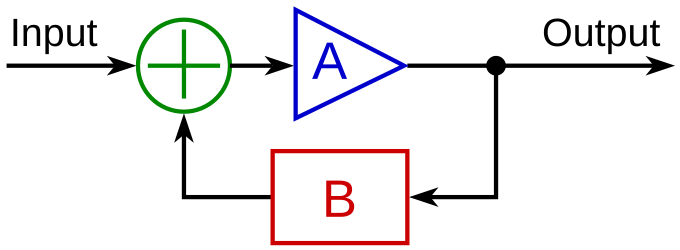
As a final musement I want to share my theory of quantum feedback in the brain. Many have theorized that the explanation for human's peculiar difference from our closest species, chimpanzees, lies in the consciousness - our ability to think about what we think about, or the ability to feed back our thoughts into a new thought-process. From a strict physics-based understanding it makes no difference - you could maul an idea million times over, the times you do it and the conclusions you get would still be a product of interactions of chemicals in your brain, all following natural laws. But considering will as one of those fancy emergent properties gives fascinating insights. Now, we know that quantum effects could indeed play a role in affecting the outcomes of our decisions (which are products of chemical interactions). Consider the feed back loop again. It would hardly be convincing to claim that some "noise" from quantum effects could make much change in one pass. And this is where consciousness comes into play - what if our brains can serve as a sort of sieve, an aggregator for quantum "input". Perhaps this explains creativity and, I loathe to say this, revelation - when the human brain keeps re-processing a think, each time some quantum noise appears and it is stored. It might be possible that after some number of loops the input is comprised solely of the quantum noise, stimulus that has come, seemingly, out of nowhere in particular. Of course, in the end it is the natural-law-governed brain that does the sieving and this ability to get input out of nowhere is still evolutionary guided and naturally allowed, hence, not free, but it gives a hopeful chance to break free from total determinism and bring some direction into randomness. A sort of natural selection of thoughts. May they bring us well-being.
Discuss!
1. Cosmological constant seems to change a bit http://www.space.com/9122-physics-fundamental-cosmic-constant-shifty.html
2. Some claim even this could not give freedom, but merely a pre-loaded determinism http://danielmiessler.com/blog/free-will-again-a-response-to-a-reddit-question

Nav komentāru:
Ierakstīt komentāru